Verify an article by link
Verifying an article by link means extracting the factual claims from it and confronting them, one by one, with independent sources. Justificat.ro does this automatically: it reads the article from the URL, identifies what can be checked and produces a verdict with the sources consulted.
What gets checked in an article
Not everything in an article is verifiable. Opinions, predictions and evaluative phrasing have no truth value. What gets checked are factual claims: figures, dates, attributions of statements, causal relations presented as fact. The rest stays outside the verdict, deliberately.
Why the headline is checked separately from the body
An article's headline and its content can say different things — the most widespread form of disinformation in traffic-driven media. A headline claiming more than the body supports makes the article misleading even if every sentence in the body is correct.
What a verdict means for a whole article
An article usually contains several claims with different status. Justificat.ro checks the main claim and, where relevant, secondary claims, showing for each what sources were found. The overall verdict reflects the central claim, not the arithmetic mean of all of them.
What you see in the result
The verdict, the confidence score, the claims identified, the sources consulted with direct links, the limitations of the analysis and what information would change the conclusion. Sources are shown in full so the reasoning can be checked independently.
Frequently asked questions
How do I verify a news article by link?
To verify an article by link, paste the URL into Justificat.ro. The platform reads the article, extracts the factual claims, searches independent sources for each and produces a verdict with a confidence score and the list of sources consulted.
What happens if the article is behind a paywall?
If the text cannot be read from the URL, the analysis runs on what is publicly accessible — usually the headline and description. The result states this explicitly, because a check on a headline alone has different value from one on the full article. The alternative is to paste the text directly.
Is the headline checked separately from the content?
Yes, and the distinction matters: a headline claiming more than the body supports makes the article misleading even if every sentence in the body is correct. It is the most widespread form of disinformation in traffic-driven media.
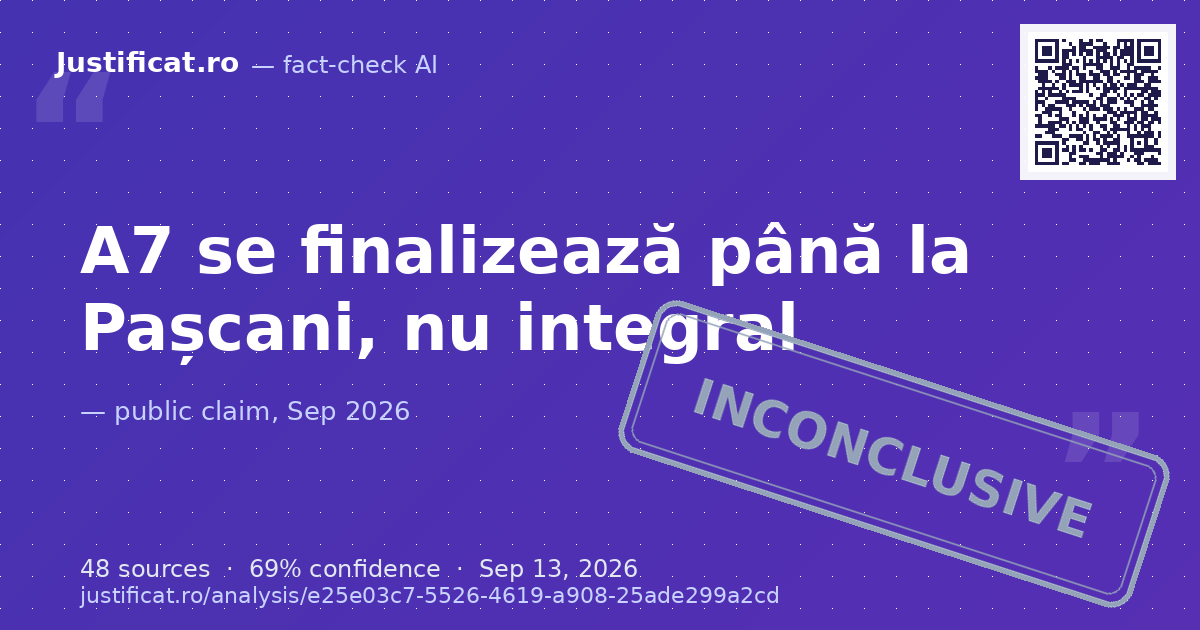 Afirmația conform căreia Autostrada Moldovei A7 va fi finalizată integral până la sfârșitul anului 2026. — NECONCLUDENT
 Afirmația privind plafonarea prețului la gaze naturale pentru consumatorii casnici până în martie 2027. — ADEVĂRAT
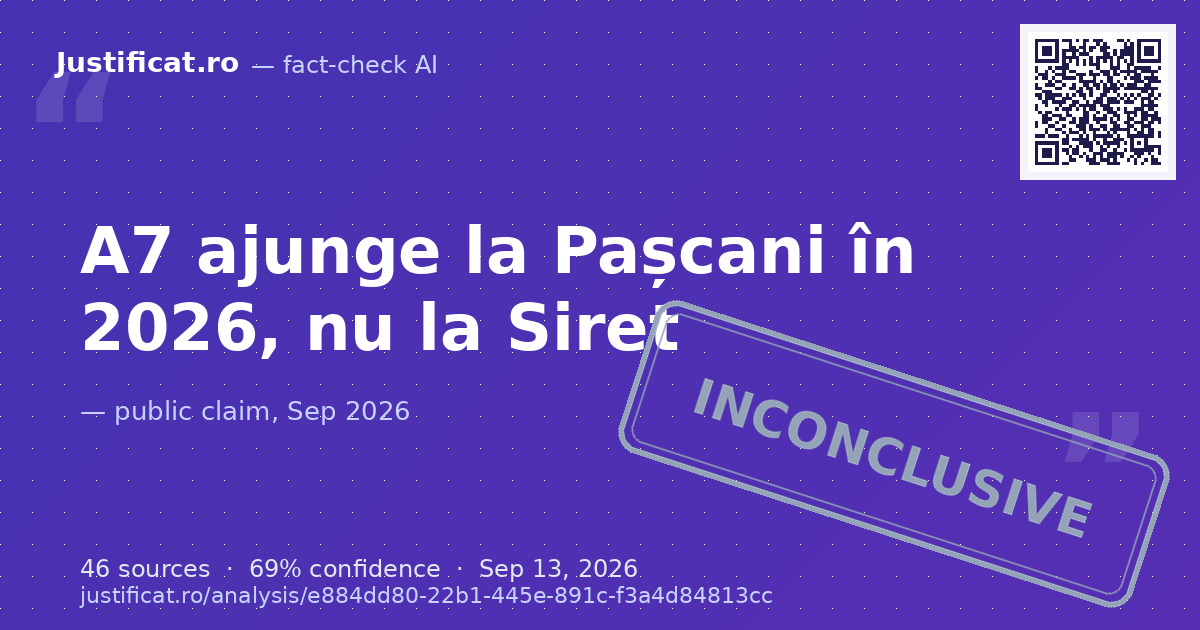 Afirmația conform căreia Autostrada Moldovei A7 va fi finalizată integral până la sfârșitul anului 2026. — NECONCLUDENT
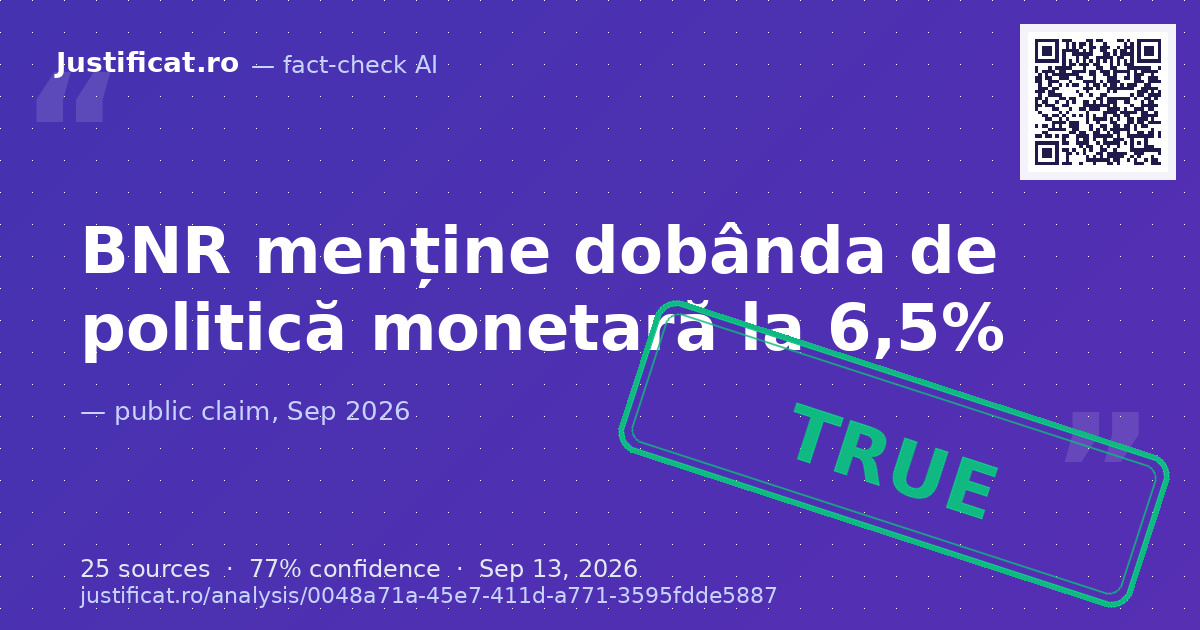 Afirmația privind decizia Băncii Naționale a României de a menține dobânda de politică monetară la nivelul de — ADEVĂRAT
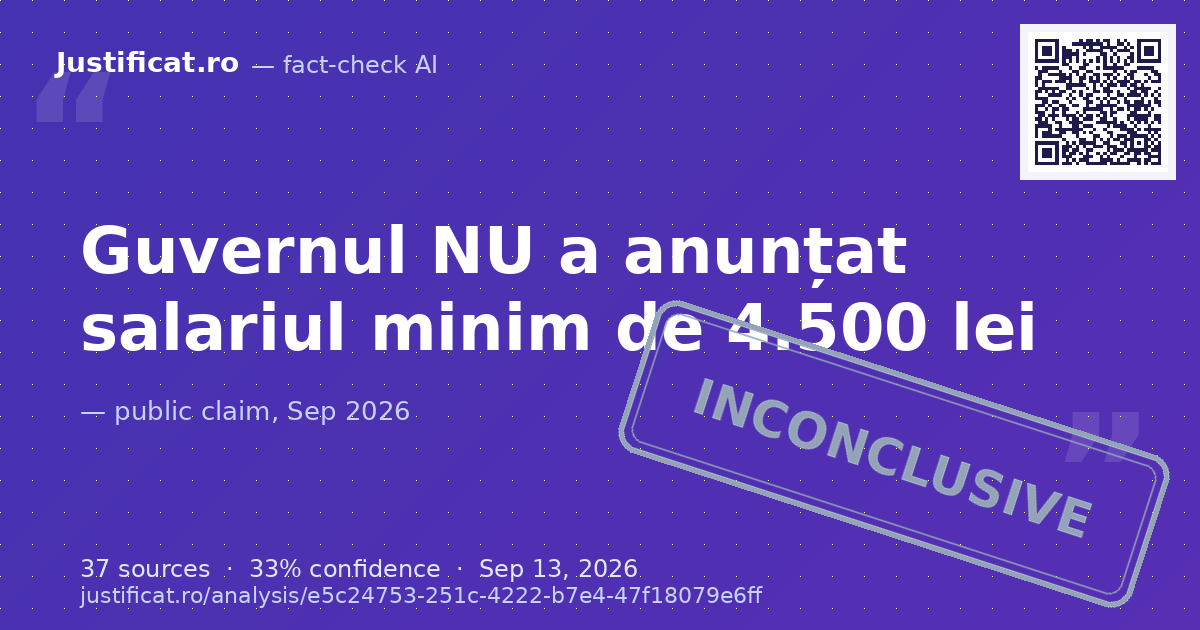 Afirmația conform căreia Guvernul ar fi anunțat că salariul minim va crește la 4.500 de lei de la 1 ianuarie 2 — NECONCLUDENT